Active Lists
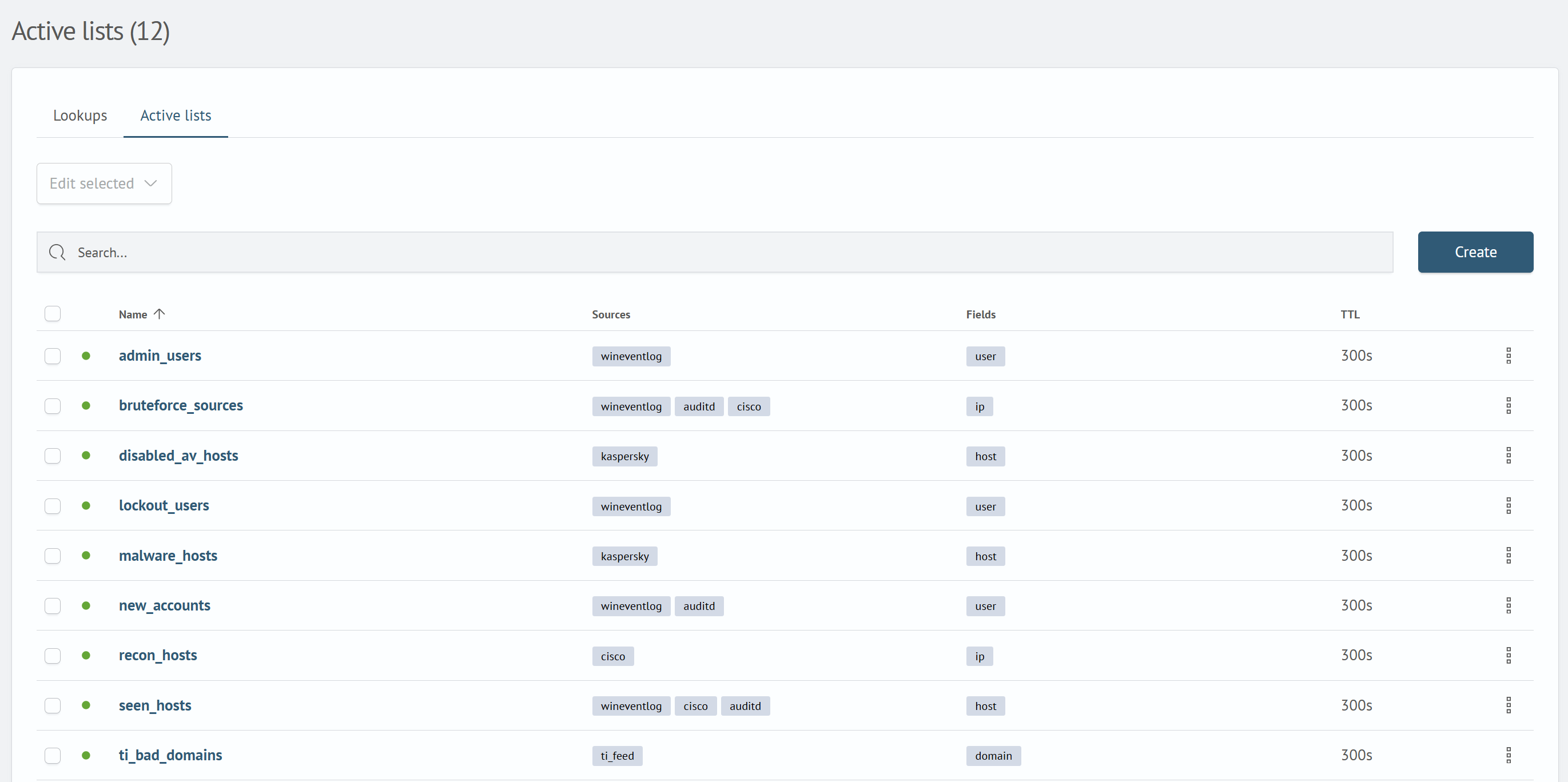
Search Anywhere Framework Streaming Correlator stores state shared between events and rules in active lists. These lists contain watchlists and accumulated attributes that rules read and populate while processing the event stream.
List Parameters
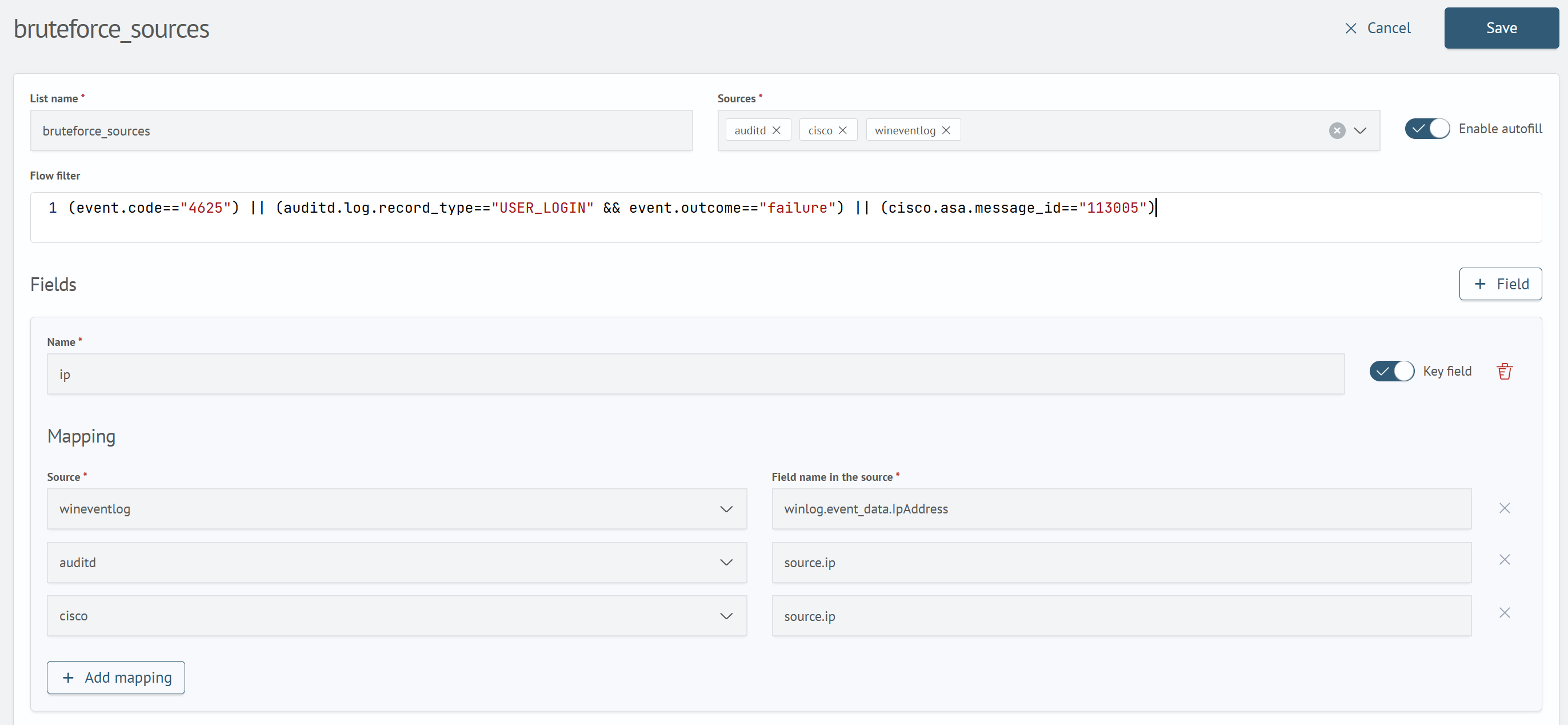
The active list editor contains the following parameters:
List Name- required field; Latin letters, digits,_, and-are allowedSources- data sources whose events populate the listEnable Automatic Population- allows the list to be populated from the event streamStream Filter- a condition in the SAFL (RTC) dialect that selects events for automatic populationFields- theFieldbutton adds a field with a requiredNameand aKey Fieldtoggle. For each field, you can expandMapping, which containsSourceandSource Field Namepairs used to extract the field value from an event received from the corresponding source.Add Mappingadds another pair. Key fields form a composite record key used to find and update records when another match occursEnable TTL- sets the record lifetime from the time it was last written. While the toggle is disabled, records are stored indefinitely and are removed only manually
A field Name must not contain . or |: those characters separate event field paths and composite record keys. A list without key fields does not update records; it appends a new one on every match.
Replication and Placement
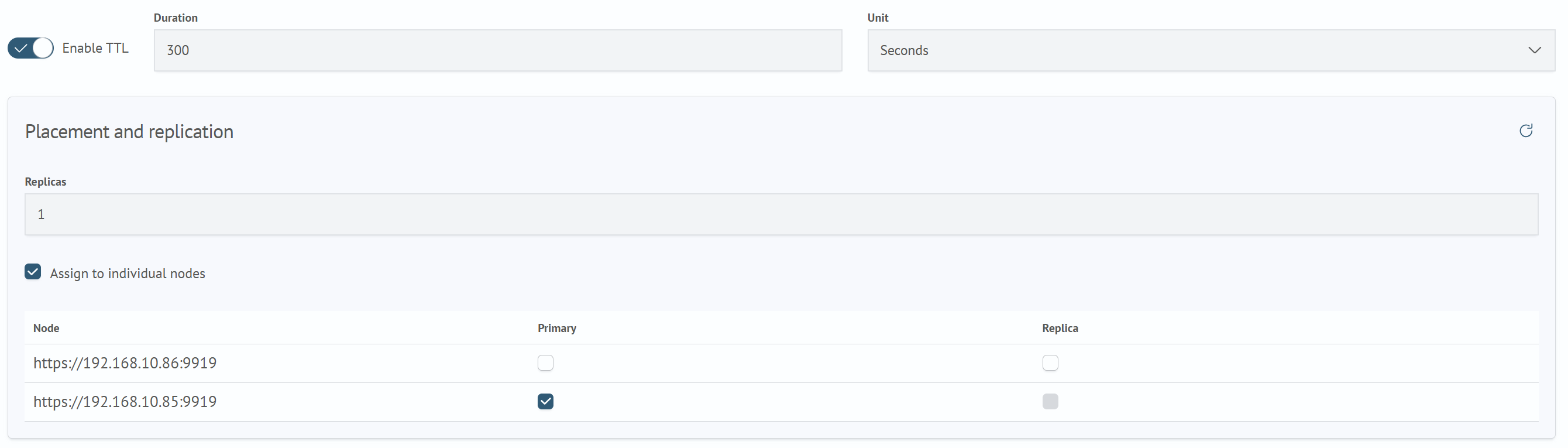
The Replication and Placement section determines which cluster nodes store the list:
Replicas- number of additional list copies besides the primary copyPin to Specific Nodes- enables manual placement. When disabled, placement of both the primary copy and replicas is determined automatically across all cluster nodes. When enabled, a table with theNode,Primary, andReplicacolumns appears. For each cluster node, the table specifies whether it is the primary (Primary) or one of the replicas (Replica) for this list
Using Active Lists in Rules
Rules access active lists through two functions in the SAFL (RTC) dialect:
alcontains(list, field as value)- checks whether the list contains a record whose specified field equals the specified value. Several field and value pairs may be given, in which case the record must match all of themalget(list, value, field)- finds a record by key value and returns the value of the specified field of that record
For the full syntax and examples, see Condition Language Functions.
alcontains(ti_ip_blacklist, destination.ip as source.address)
alget(known_hosts, host.name, status) == "trusted"
If a rule accesses two or more active lists, those lists must share a common holder node. Until such a node exists, the rule is marked as failing and its events are not processed. The state clears automatically as soon as the list placements overlap again.